

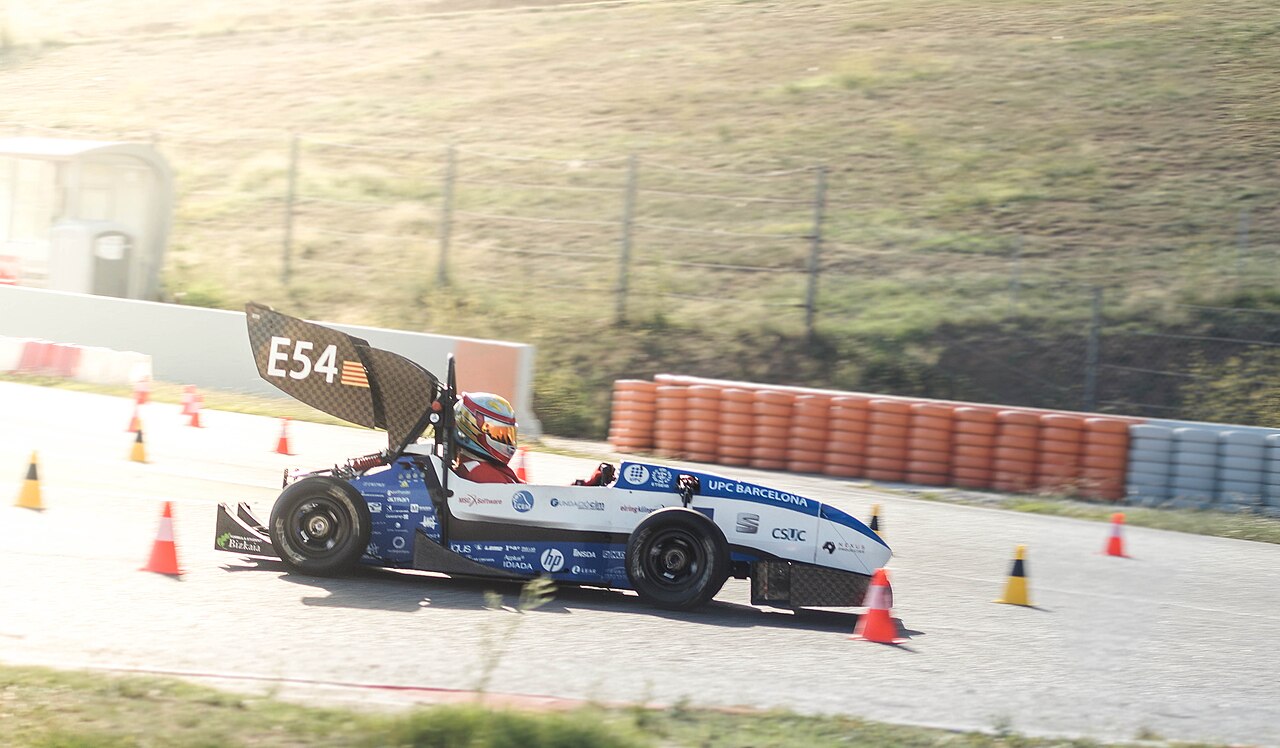
The season begins long before the car can be heard on track. In the workshop, drawings pile up beside unfinished parts and quick conversations about what still does not fit. The university team also carries the day-to-day effort behind the project. That mix of design, manufacturing and hands-on learning is where Formula Student began.
In 1981, the Society of Automotive Engineers, SAE, in the United States launched Formula SAE for combustion vehicles. It gave students a full challenge: imagining a car was not enough, they had to turn it into a machine capable of competing.
The IMechE, Institution of Mechanical Engineers, brought the competition to Europe in 1998 under the name Formula Student. Since then, it has enabled university teams to conceive, design, manufacture, develop and race small competition cars, gaining experience that comes very close to professional work.
The history of Formula Student Germany records an important moment in that expansion: a preliminary event in Leipzig in 2005 and the first full competition at Hockenheim in 2006, with 40 teams. That benchmark helped establish a way of working that brings together engineering, organisation and plenty of persistence.
The competition has developed alongside automotive technology itself. Formula Student Germany started with the combustion class in 2006, held its first fully electric competition in 2010 and organised the first driverless competition in 2017.
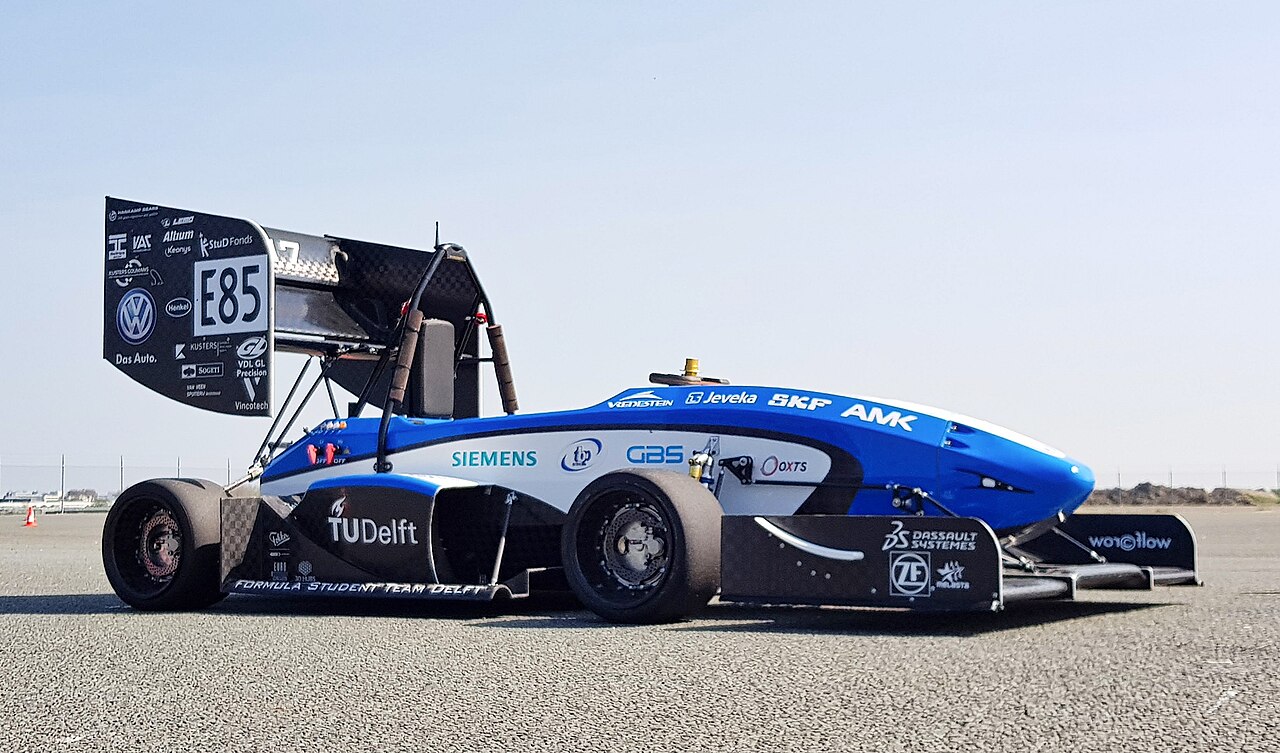
The arrival of electric vehicles brought fresh integration and development challenges. A single-seater still needs to work as a balanced whole, but every system now calls for even closer discussions between the people designing, manufacturing and validating it.
That journey becomes clear when looking at a competitive engineering car: each season builds on earlier knowledge, although new limits always appear. A car is never just a collection of separate parts.
The driverless category introduced a different kind of difficulty. The vehicle has to interpret its surroundings and act without a person at the wheel, which means approaching the project from complementary perspectives. The workshop changes, but the need to test, review and document remains.
Formula Student Spain is the national competition within this global event. It has been held at the Circuit de Barcelona-Catalunya since 2010, is organised by the Sociedad de Ingenieros de Automoción, STA, and operates on a non-profit basis.
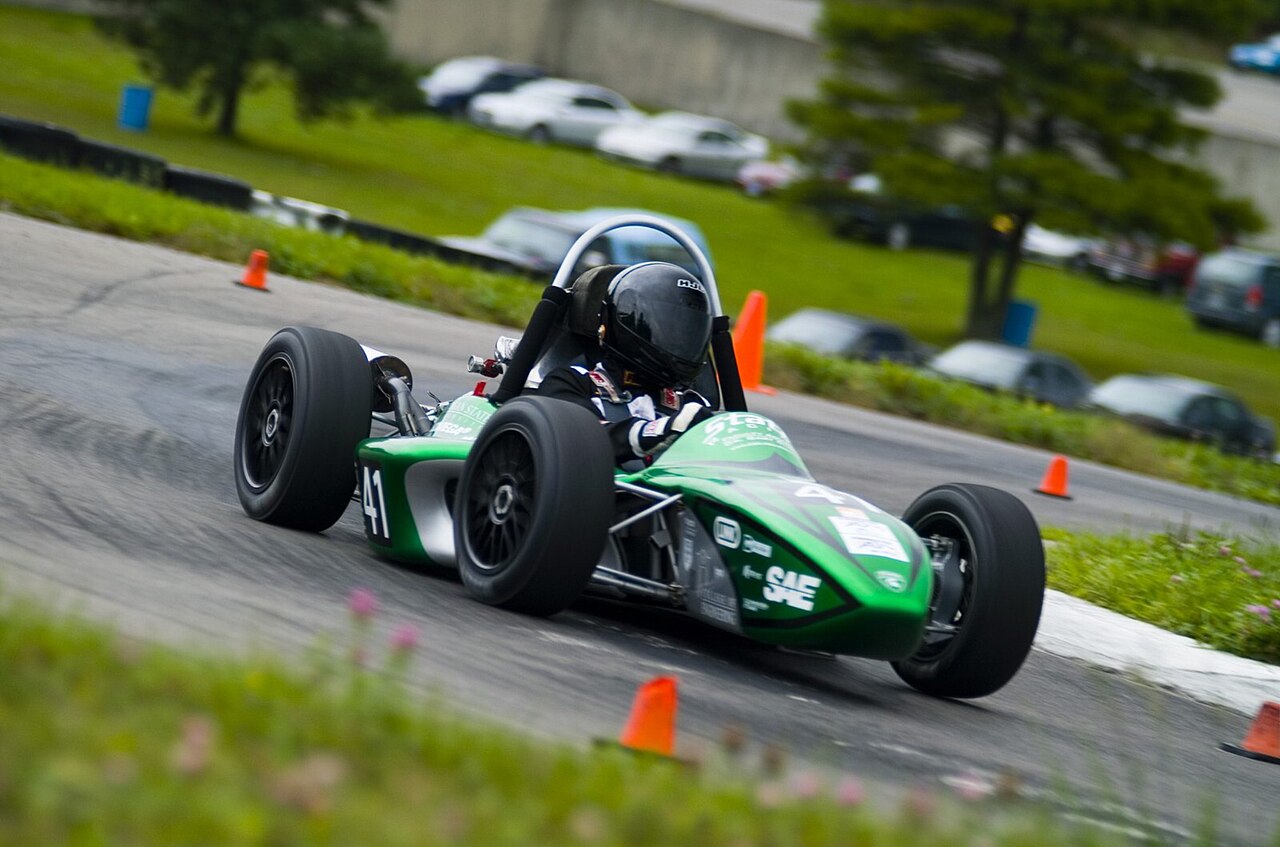
The Formula Student Spain competition provides a meeting point for university projects with different approaches. In the paddock, you can see the result of many months of work, from the finished car to the small checks still being made before it goes out on track.
The car is the most visible part, but it does not explain everything that happens during a season. There is design, manufacturing, management, communication and resource coordination. Formula Student turns a university project into real engineering experience
The structure of the team departments and roles allows technical decisions to carry through the rest of the project. A small change can affect assembly, documentation or planning. Sometimes that becomes clear late on, and part of the work has to be redone.
The routine usually includes very specific tasks:
Learning to spot a fault is part of the process too. It is not comfortable, but it stops the same problem from travelling further.
When the shift ends, tools are left on the table, computers are still on and the list seems to grow by itself. The break is usually short. A glass of water and a few minutes away from the noise are enough to put thoughts in order.
During that break by the workshop door, while people talk over a test that did not go as expected, someone might check casinova for a moment. Then the usual pace returns, with a connection to inspect or a note that should not be left until tomorrow.
The tiredness is noticeable, of course. So is the feeling that an apparently minor task might unlock the work for the next session.
IMechE describes Formula Student as Europe’s most established educational engineering competition, with more than 100 university teams each year. To understand it better, it is worth looking at what happens away from the track as well.
When the day ends, the workshop is usually left with a partly assembled car and a few tools already put away. That is what a team takes from a season: method, responsibility and the habit of returning the next day to keep refining the work.
The Formula Student tests page summarises the competition format. References: Formula Student and open-wheel car.
All intellectual property rights of the content of this website, its graphic design and source code are the exclusive property of EUSS MotorSport. Reproduction, distribution, public communication and transformation, total or partial, without express authorisation is prohibited. All commercial names, trademarks and signs contained on this site are protected by law.
EUSS MotorSport is not responsible for any misuse of the contents of this website; that responsibility lies with the person who accesses or uses them.
EUSS MotorSport declines any liability arising from the exchange of information between users through this website.
EUSS MotorSport reserves the right to update, modify or delete the information on this website, and its configuration or presentation, at any time and without prior notice.
EUSS MotorSport assumes no responsibility for technical problems or failures in computer equipment not directly attributable to this website, nor for damages caused by third parties through illegitimate intrusions outside its control.
In compliance with Organic Law 15/1999 of 13 December on the Protection of Personal Data, EUSS MotorSport informs users that any personal information provided will be included in an automated file created and maintained under its responsibility. Users may exercise their rights of access, rectification, cancellation and opposition in writing to [email protected].
Relationships derived from the provision of services contained in this website are subject to Spanish legislation and jurisdiction.
Cookies are files that websites store in the browser of visiting users, necessary to provide browsing benefits in interactive services.
Session cookies collect and store data while the user accesses a web page and are not registered on the user's disk. Persistent cookies keep data stored in the terminal and can be accessed and processed for a period defined by the cookie.
Own cookies are generated by the website itself. Third-party cookies are received when browsing this page but have been generated by a third service hosted there.
Technical: necessary for the operation of the page. Customisation: language or regional configuration. Analysis: anonymous measurement of visits. Advertising: efficiency of the advertising offered.
www.eussmotorsport.com uses strictly necessary session cookies that allow browsing and the use of essential functions (navigation, language). These cookies do not collect information that can be used for marketing. Third-party analytics (Google Analytics) is used to compile anonymous statistics.
Internet Explorer, Google Chrome, Firefox and Safari allow cookies to be deleted from their preferences or settings panels.


